For specifiers
How much does a large glass composition weigh
From 4.3 to 447.7 kg — inside a single catalogue. Eight calculated compositions instead of a bracket.
Mass comes from three quantities: how many elements there are, how large each one is, and whether the glass is solid or hollow. Change any of them and the result shifts several times over. A composition in a 600 × 600 × 600 mm zone weighs 4.3 kg; another, in a 3000 × 2000 × 2500 mm zone, weighs 447.7 kg. Either one is a large glass composition. And two compositions in one and the same 1300 × 1000 × 1200 mm zone weigh 61.6 and 142 kg: 2.3 times apart in the same box.
That is why the usual answers — “3 to 20 kg”, “30–40 kg” — give a specifier nothing: they describe a product category, while the decision is made about one particular piece over one particular ceiling.
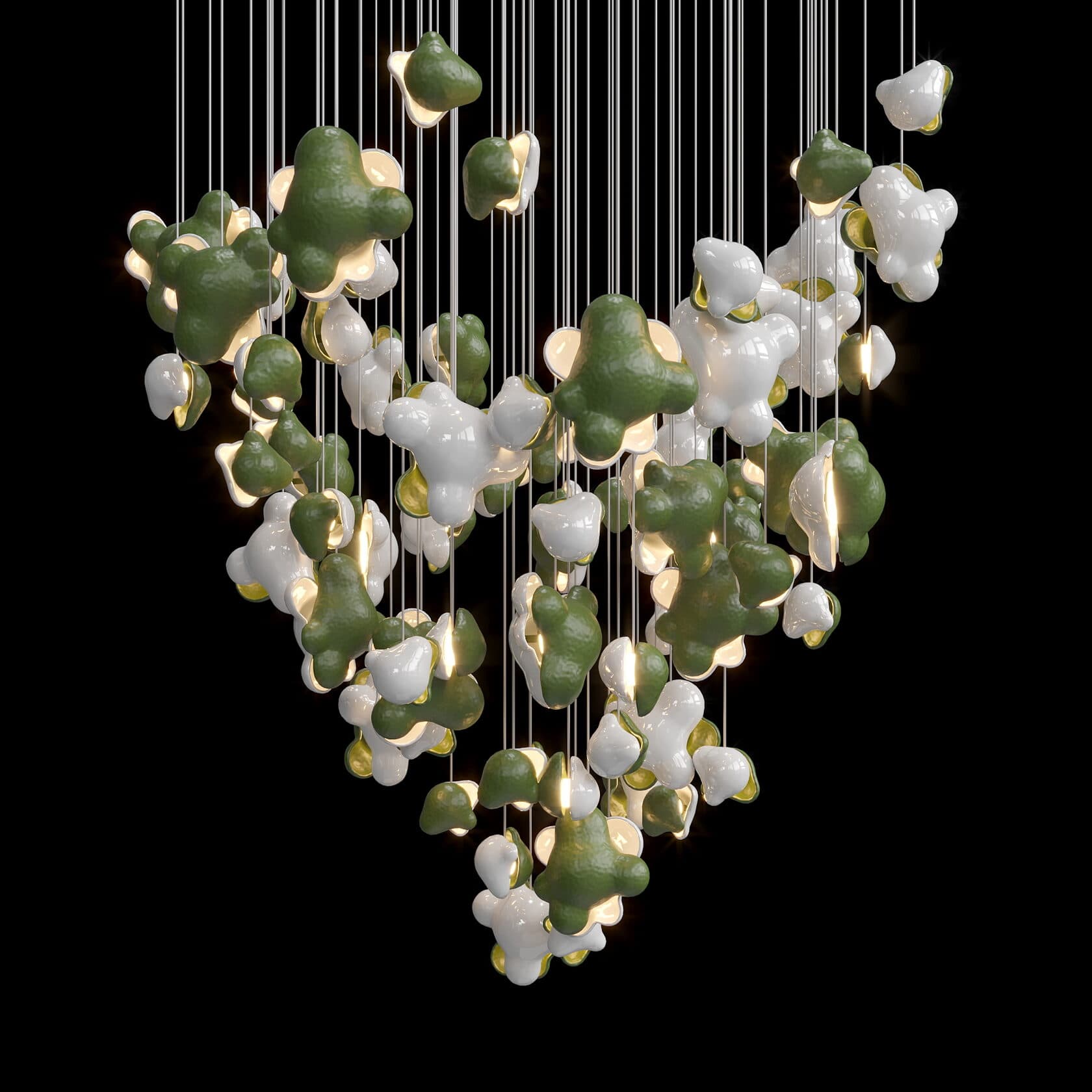
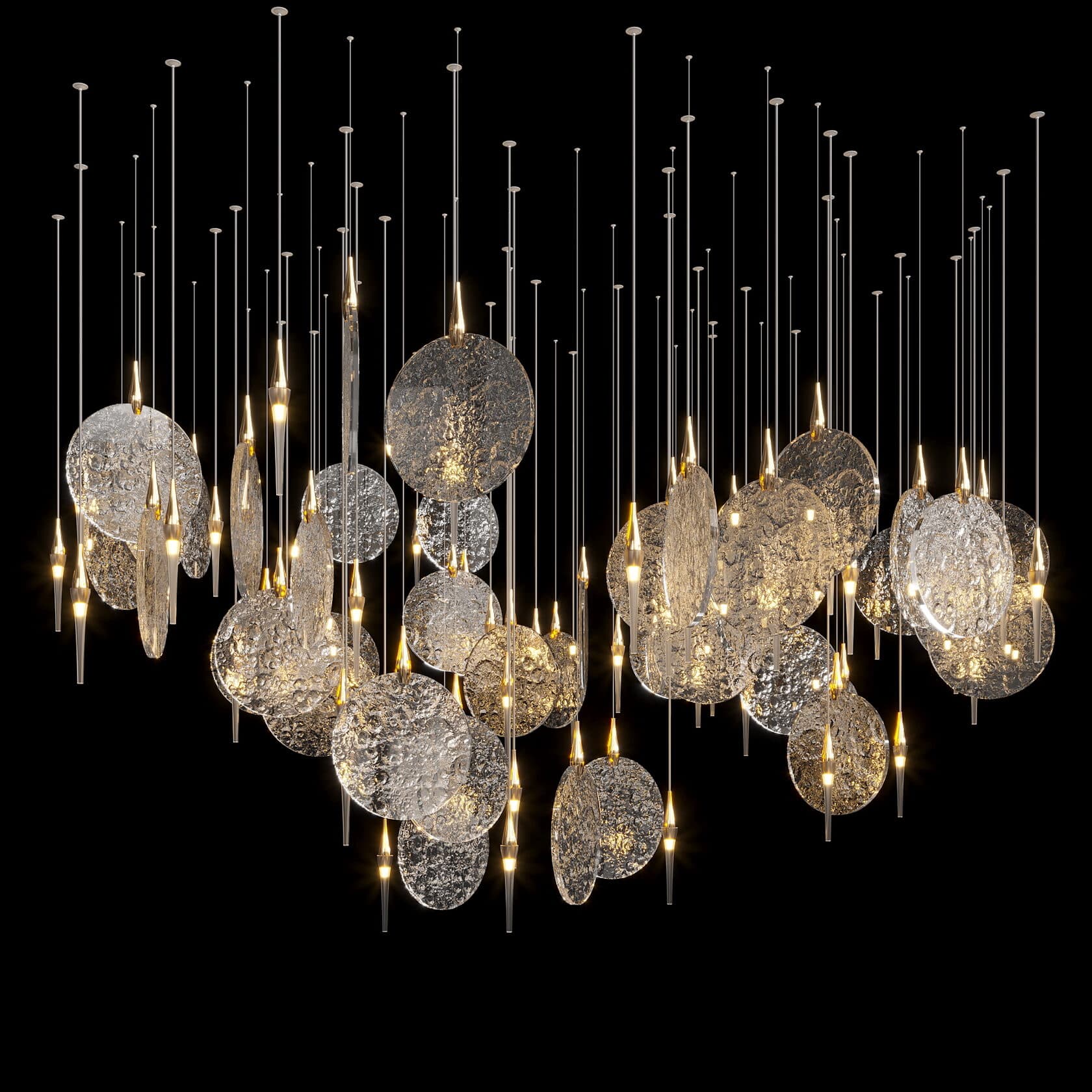
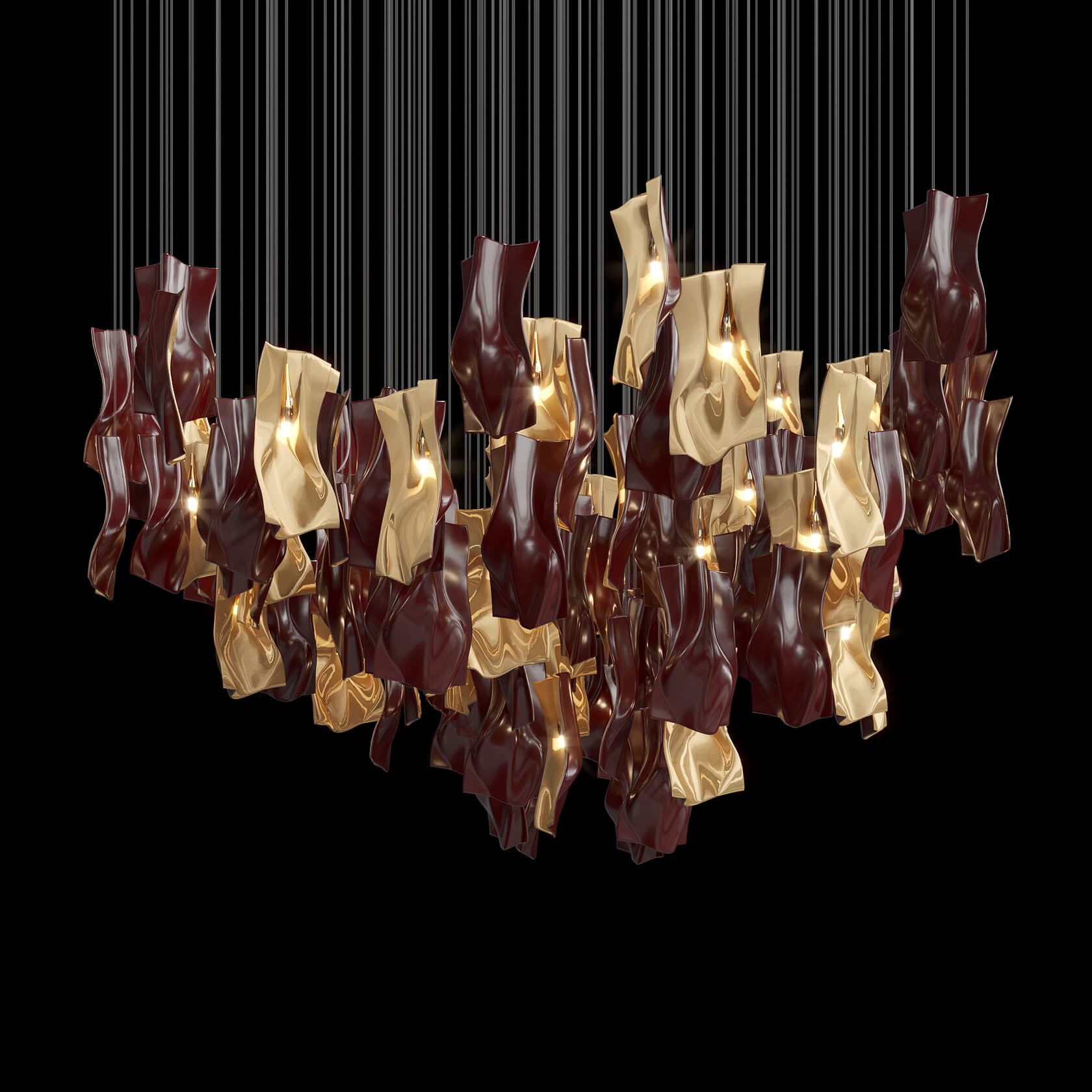
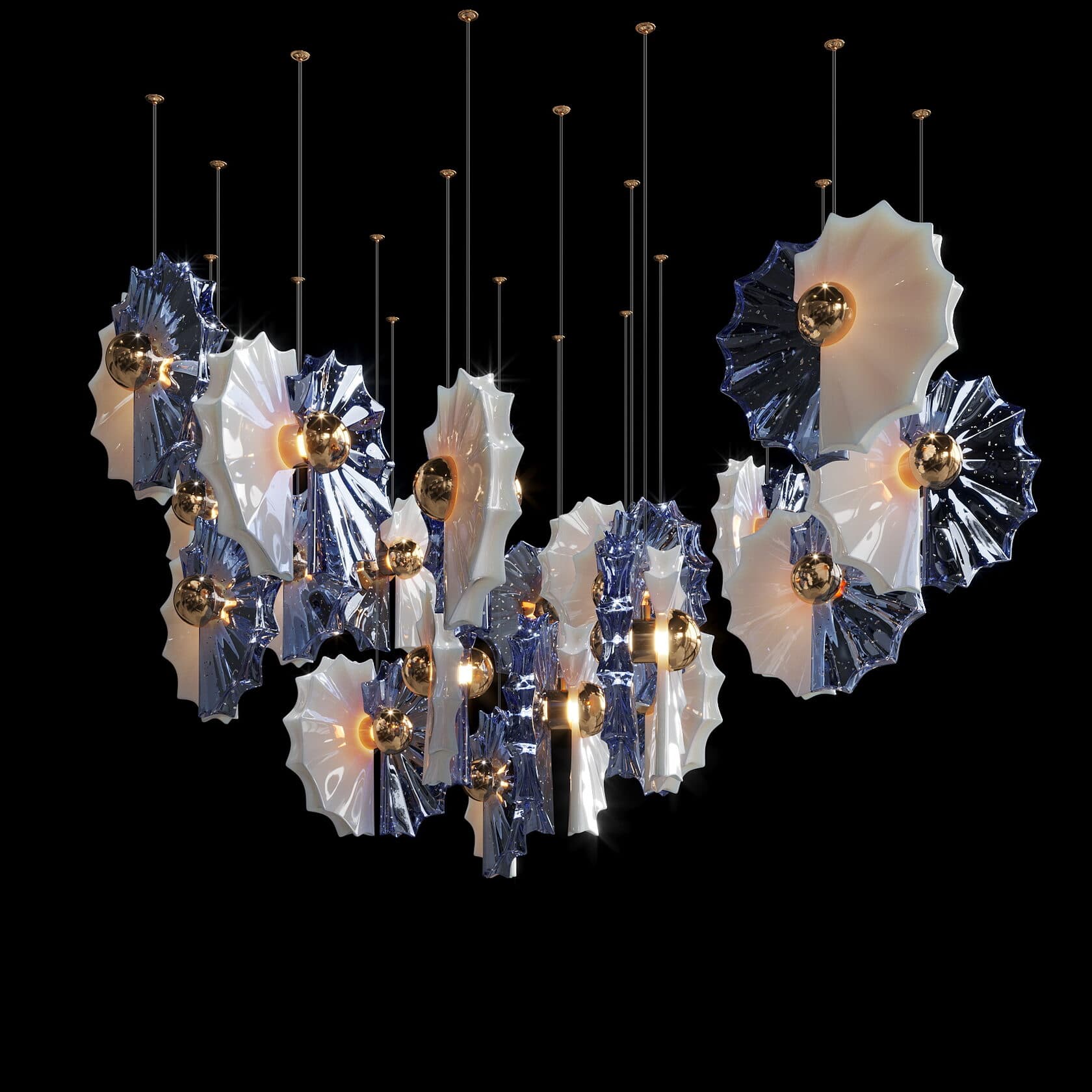

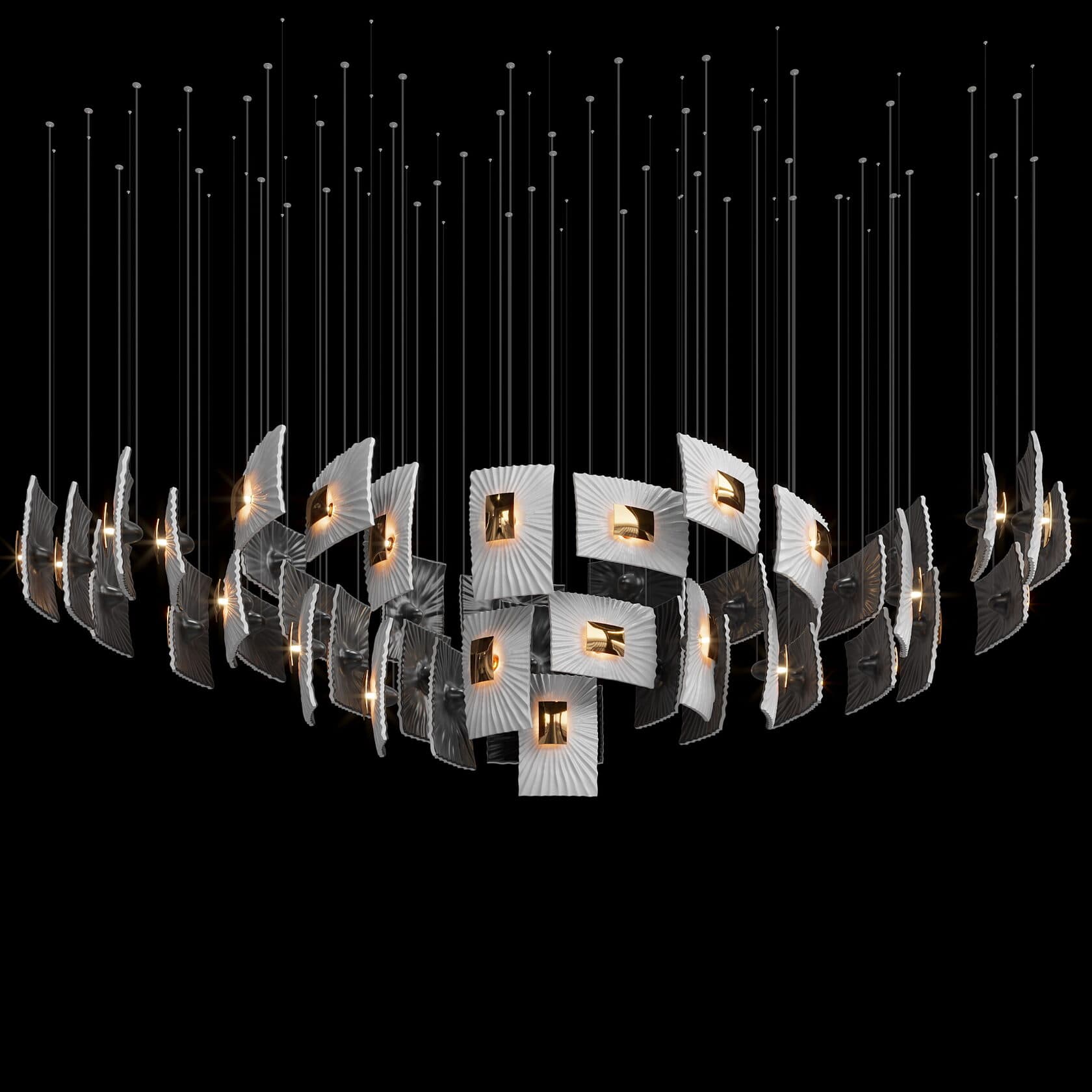
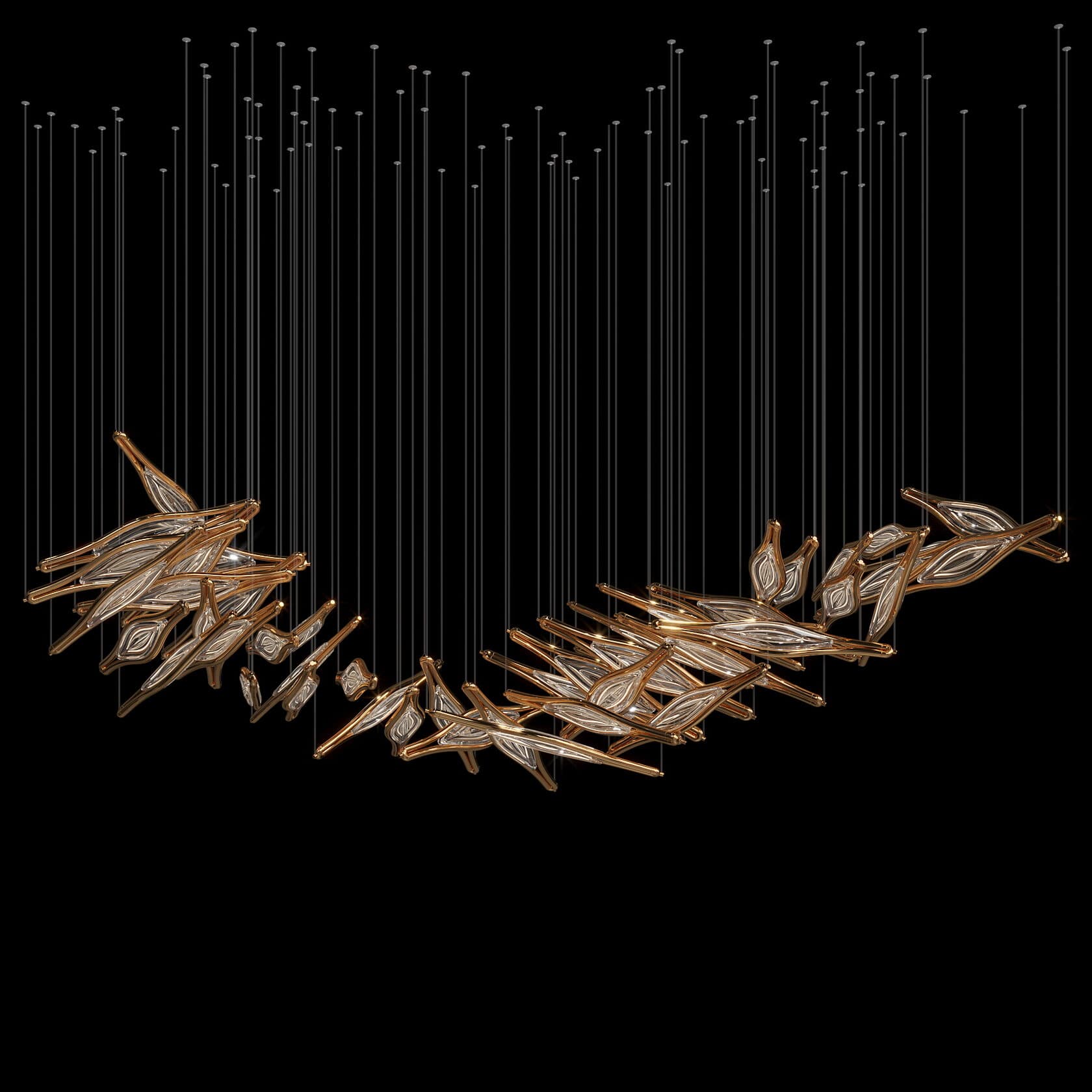
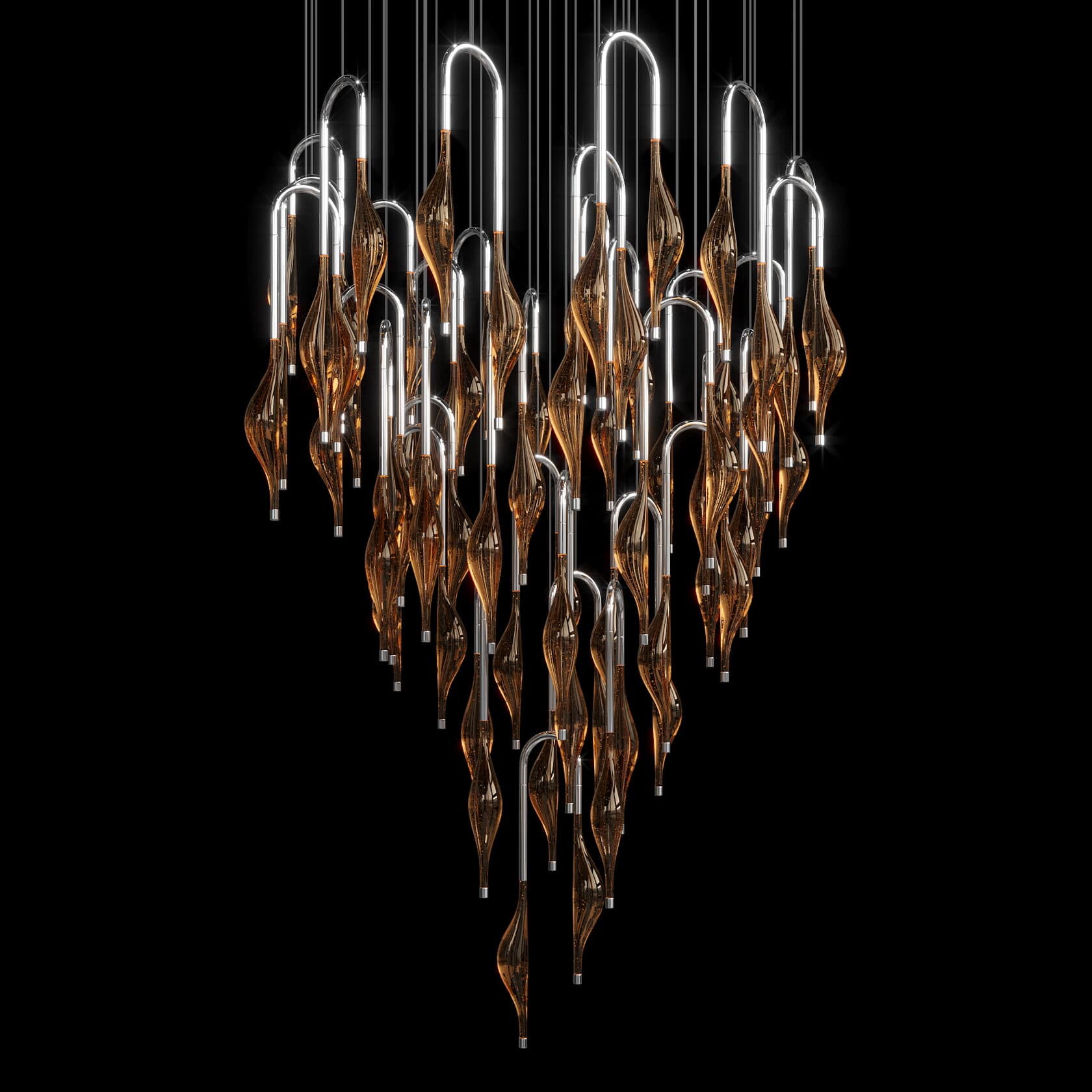
- Zone, mm
- 600 × 600 × 600
- Elements
- 11
- Mass, kg
- 4.3
- Points
- 11
- Per point, kg
- 0.39
- Zone, mm
- 700 × 700 × 800
- Elements
- 8
- Mass, kg
- 13.1
- Points
- 16
- Per point, kg
- 0.82 (max. 1.64)
- Zone, mm
- 900 × 900 × 1000
- Elements
- 49
- Mass, kg
- 65.1
- Points
- 49
- Per point, kg
- 1.33
- Zone, mm
- 1200 × 800 × 1000
- Elements
- 21
- Mass, kg
- 89.7
- Points
- 21
- Per point, kg
- 4.27
- Zone, mm
- 1300 × 1000 × 1200
- Elements
- 122
- Mass, kg
- 61.6
- Points
- 122
- Per point, kg
- 0.51
- Zone, mm
- 1300 × 1000 × 1200
- Elements
- 76
- Mass, kg
- 142.0
- Points
- 76
- Per point, kg
- 1.87
- Zone, mm
- 1500 × 1000 × 1400
- Elements
- 148
- Mass, kg
- 310.1
- Points
- 148
- Per point, kg
- 2.10
- Zone, mm
- 3000 × 2000 × 2500
- Elements
- 241
- Mass, kg
- 447.7
- Points
- 241
- Per point, kg
- 1.86
| SKU | Zone, mm | Elements | Mass, kg | Points | Per point, kg | Build |
|---|---|---|---|---|---|---|
| LC0576 | 600 × 600 × 600 | 11 | 4.3 | 11 | 0.39 | Build → |
| LC0588 | 700 × 700 × 800 | 8 | 13.1 | 16 | 0.82 (max. 1.64) | Build → |
| LC0578 | 900 × 900 × 1000 | 49 | 65.1 | 49 | 1.33 | Build → |
| LC0568 | 1200 × 800 × 1000 | 21 | 89.7 | 21 | 4.27 | Build → |
| LC0055 | 1300 × 1000 × 1200 | 122 | 61.6 | 122 | 0.51 | Build → |
| LC0585 | 1300 × 1000 × 1200 | 76 | 142.0 | 76 | 1.87 | Build → |
| LC0584 | 1500 × 1000 × 1400 | 148 | 310.1 | 148 | 2.10 | Build → |
| LC0566 | 3000 × 2000 × 2500 | 241 | 447.7 | 241 | 1.86 | Build → |
The figures are calculated. The mass is computed from the element geometry and the density of the glass, plus the frame where there is one. For your project the mass and the load per fixing point are confirmed from the 3D model of the composition before production.
Two rows deliberately share one zone of 1300 × 1000 × 1200: 61.6 and 142 kg in the same box. And LC0568 in a 1200 × 800 × 1000 zone weighs 89.7 kg — more than LC0055 in a zone 1.6 times larger: 61.6 kg. The envelope does not determine the mass; what the piece is made of, and how, does.
One composition, one zone — different mass
Above are eight different compositions, and you could argue the spread comes from that. So take one: LC0576, a zone of 600 × 600 × 600 mm, the same density, the same size range. One thing changes — how the elements are laid out in the volume.
| Cloud shape | Elements | Mass, kg | Per point, kg |
|---|---|---|---|
| Serpentine | 5 | 1.8 | 0.37 |
| Arc / ribbon | 7 | 2.7 | 0.38 |
| Spiral | 9 | 3.5 | 0.39 |
| Sphere | 11 | 4.3 | 0.39 |
| Ring | 13 | 5.2 | 0.40 |
| Cube / box | 15 | 6.0 | 0.40 |
| Cascade | 17 | 6.8 | 0.40 |
From 1.8 to 6.8 kg — 3.8 times over, on one and the same article in one and the same zone. A bracket of “3 to 20 kg” describes that difference as a single figure, and a specifier can do nothing with it.
The per-point column barely moves: 0.37–0.40 kg. On LC0576 each point carries one element, so the shape changes mass and count but not the load on an individual fixing. The figures are calculated, as in the table above.
Heavy does not mean large
Across these examples a single element weighs between 0.18 and 8.48 kg. There is a spread inside one composition too: in LC0055 the lightest element is 0.27 kg and the heaviest 2.13 kg, 8 times heavier. An element’s mass follows the volume of its glass, not the size in its name, so a large element can be lighter than a small one: the H600 element of LC0566 weighs 1.73 kg, while the H350 of LC0568 weighs 8.48 kg. Solid glass weighs by volume, hollow glass by wall area.
The mass is spread across the mounting points
A composition does not hang from a single hook: every element reaches the ceiling on its own suspension. In LC0566 the 447.7 kg are 241 holes at 1.86 kg each. That is why our files carry more than the total mass: the IFC4 model holds the load on every point, the specification the average and the maximum.
Across the catalogue most SKUs have one point per element; some have more, where an element hangs on several lines; a few have fewer, where one line carries a threaded column.
Values are calculated by the configurator engine from the actual composition layout. Verification of the slab's load-bearing capacity and selection of fixings is the specifier's responsibility.